Fractures are common injuries that require early diagnosis and appropriate treatment to ensure proper bone healing and prevent complications. Adhering to preventive measures and following treatment and rehabilitation recommendations can help accelerate recovery and restore normal function to the affected area.
Fractures are among the most common injuries affecting people of all ages. They occur when a bone is subjected to a force or pressure greater than it can withstand, resulting in a break or crack. Fractures may result from falls, motor vehicle accidents, sports injuries, or certain medical conditions such as osteoporosis.
Types of Fractures
Fractures can be classified into several types, including:
- Closed Fracture: A broken bone without an associated skin wound.
- Open Fracture: A fracture in which the bone penetrates the skin.
- Complete Fracture: The bone is broken into two or more separate pieces.
- Incomplete Fracture: A crack or partial break without complete separation of the bone.
- Greenstick Fracture: Common in children, where the bone bends and cracks without breaking completely.
- Transverse, Oblique, and Spiral Fractures: Classified according to the direction of the fracture line.
- Comminuted Fracture: The bone is broken into multiple fragments.
- Compression Fracture: Most commonly affects the vertebrae due to excessive pressure.
Symptoms
Symptoms vary depending on the location and severity of the fracture and may include:
- Severe pain that worsens with movement.
- Swelling around the injured area.
- Bruising or skin discoloration.
- Deformity or abnormal appearance of the affected limb.
- Difficulty or inability to move the affected area.
- Numbness or tingling in some cases.
- Bone protruding through the skin in open fractures.
Diagnosis
The diagnosis of fractures is based on:
- Clinical examination and assessment of symptoms.
- X-rays to determine the type and location of the fracture.
- Computed Tomography (CT) scans when additional detail is required.
- Magnetic Resonance Imaging (MRI) to evaluate soft tissues and complex injuries.
First Aid
If a fracture is suspected, the following measures should be taken:
- Immobilize the injured area and prevent movement.
- Apply cold compresses to reduce swelling and pain.
- Elevate the affected limb if possible.
- Avoid attempting to realign the bone.
- Seek immediate medical attention, especially in cases of open fractures or severe pain.
Treatment
Treatment depends on the type and severity of the fracture and may include:
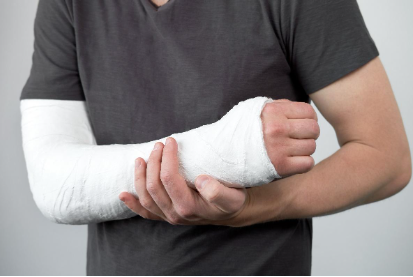
- Immobilization using splints or casts.
- Manual or surgical realignment of the bone.
- Pain relievers and anti-inflammatory medications.
- Surgical fixation using plates, screws, or rods when necessary.
- Rehabilitation and physical therapy programs to restore strength and mobility.
Potential Complications
Some fractures may lead to complications such as:
- Delayed healing or nonunion of the bone.
- Infection, particularly in open fractures.
- Damage to nerves or blood vessels.
- Joint stiffness and reduced mobility.
- Permanent bone deformities if not properly treated.
Prevention
The risk of fractures can be reduced by:
- Engaging in regular physical activity to strengthen bones and muscles.
- Following a diet rich in calcium and vitamin D.
- Using protective equipment during sports activities.
- Adhering to safety measures at home and in the workplace.
- Preventing falls, especially among older adults.


 Home
Home
 Courses & Activities
 About AFAQ
  Contact us